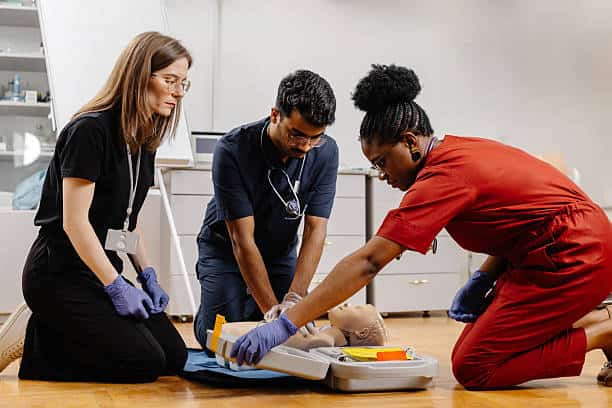
You have spent years at bedsides, building skills that most nursing textbooks can only describe. As a CNA, you know how to read a patient’s discomfort before a call light goes off. That hands-on experience is worth something real when you decide to become a Licensed Vocational Nurse in California — and it puts you closer to that goal than you might realize.
This guide walks you through the specific paths California offers CNAs who want to transition to LVN, what to expect from each option, and how to choose the right fit based on where you are in your career right now.
Why the CNA-to-LVN Step Is Worth Taking
The pay difference alone makes a compelling case. According to the U.S. Bureau of Labor Statistics (BLS), the median annual wage for nursing assistants in California is around $41,000. Licensed Vocational Nurses in California earn a median of approximately $67,000 per year, with experienced LVNs in the Los Angeles area regularly surpassing $75,000.
Beyond salary, the scope of practice expands significantly. As an LVN in California, you can administer medications, perform venipuncture, manage IV lines under supervision, and take a much more active role in care planning. You stay at the bedside — but with more authority and more clinical responsibility.
What California Requires Before You Can Sit for the NCLEX-PN
In California, the credential is Licensed Vocational Nurse (LVN) — not Licensed Practical Nurse (LPN), which is the title used in most other states. Licensing is governed by the California Board of Vocational Nursing and Psychiatric Technicians (BVNPT).
To become an LVN in California, you must complete a BVNPT-approved vocational nursing program and pass the National Council Licensure Examination for Practical Nurses (NCLEX-PN). The NCLEX-PN uses computerized adaptive testing (CAT), meaning the difficulty of each question adjusts based on your performance — the exam tests clinical judgment, not just recall.
California requires LVN programs to include a minimum of 1,530 total clock hours, covering both classroom theory and supervised clinical training across specialties including medical-surgical, maternal, and geriatric nursing.
Three Paths from CNA to LVN in California
Path 1: Enroll in a Full BVNPT-Approved LVN Program
The most direct route is enrolling in a BVNPT-approved vocational nursing program. Most programs run 12 to 18 months and include all required theory and clinical hours. You do not need prior healthcare experience to apply — but as a CNA, you walk in with clinical habits and patient care instincts that most classmates are still developing.
Your CNA experience does not exempt you from any program hours under California regulations, but it does give you a real advantage in clinical rotations and skills assessments. Many instructors will tell you that CNAs who enter LVN programs tend to settle into the clinical environment faster than students with no hands-on background.
Path 2: Enroll in a CNA-to-LVN Bridge Program
Some BVNPT-approved programs offer accelerated tracks specifically designed for CNAs and other healthcare workers. These bridge programs typically run 6 to 12 months. They still meet all BVNPT minimum-hour requirements — they are structured to move faster because students enter with foundational clinical skills already in place.
Not all schools offer bridge tracks. If you are specifically looking for one, confirm with the program director that the track is BVNPT-approved and that the completion credential qualifies you to apply for LVN licensure in California.
Path 3: The Challenge Method (Method #5)
California has a rarely-used but real pathway called Method #5, which allows individuals with substantial healthcare experience to challenge the NCLEX-PN without completing a full LVN program. To qualify, you must have at least 51 months of continuous paid, full-time bedside nursing experience in the last 10 years — and that experience must be verified and reviewed by the BVNPT.
This path is uncommon because the eligibility requirements are strict and the BVNPT reviews each application individually. If you are considering it, contact the BVNPT directly at bvnpt.ca.gov to determine whether your specific experience qualifies before investing time in the application process.
Comparing Your Three Options at a Glance
| Pathway | Typical Duration | CNA Experience Advantage | Best For |
|---|---|---|---|
| Full LVN Program | 12–18 months | Faster clinical adjustment | Most CNAs |
| CNA-to-LVN Bridge | 6–12 months | Structured to build on existing skills | CNAs with recent bedside experience |
| Challenge Method #5 | Varies (51+ months experience required) | Required for eligibility | Very experienced CNAs only |
How to Choose the Right Path
Start by asking yourself one question: how quickly do you want to be working as an LVN?
If you have solid CNA experience and want a clear, structured path with faculty support and clinical rotations built in, a full BVNPT-approved program at a reputable school gives you everything you need. You will graduate with a strong foundation, a credential that carries weight with California employers, and NCLEX-PN preparation embedded throughout the curriculum.
If you meet the experience requirements for a CNA-to-LVN bridge track and speed matters to you, verify the program is BVNPT-approved and ask what the school’s NCLEX-PN pass rate is. A high first-attempt pass rate is one of the clearest signals of program quality.
The challenge method is worth knowing about, but it is not the right choice for most CNAs. The eligibility bar is high, the process is slow, and you miss out on structured curriculum review and exam preparation.
What to Look for in a Los Angeles LVN Program
Not all BVNPT-approved programs are the same. When you evaluate schools in the Los Angeles area, focus on the factors that will actually affect your outcome:
- NCLEX-PN first-attempt pass rate — ask for current data, not a school average from five years ago
- Whether the program includes dedicated NCLEX-PN preparation, not just curriculum review
- Faculty experience — instructors who have worked as nurses in California bring real practice context
- Clinical placement sites — more varied rotations build stronger preparation for a range of LVN roles
- Schedule flexibility — if you are working while studying, ask whether day and evening options are available
Career Development Institute (CDI) in Los Angeles has been training vocational nurses for over 20 years. The school received LA Times recognition for return on investment, operates a BVNPT-approved VN program with 1,500+ combined program hours, and prepares students for the NCLEX-PN throughout the curriculum. The program runs approximately 13 months. Financial aid is available for eligible students.
After LVN: What Comes Next
Once you pass the NCLEX-PN and hold your California LVN license, your career options expand considerably. LVNs work in hospitals, skilled nursing facilities, physician offices, outpatient clinics, home health, and correctional healthcare — all active employment sectors in Los Angeles.
For CNAs who want to keep advancing, the LVN-to-RN bridge pathway is a well-established option in California. Completing an LVN program does not close that door. Many LVNs work for a few years, build financial stability, and then enroll in an LVN-to-RN bridge program that gives credit for prior vocational nursing education.
Frequently Asked Questions
Does my CNA experience count toward LVN program hours in California?
Not directly. California’s BVNPT requires all LVN program graduates to complete the full approved curriculum, including clinical hours. Your CNA experience does not reduce the total hours required. However, it gives you practical skills that make clinical training more productive.
How long does it take to go from CNA to LVN in California?
Most CNAs complete the transition in 12 to 18 months through a full BVNPT-approved program. If a CNA-to-LVN bridge program is available and you qualify, the timeline may be closer to 6 to 12 months. The challenge method timeline varies and depends on BVNPT review.
What does the NCLEX-PN exam involve?
The NCLEX-PN uses computerized adaptive testing (CAT). The exam adjusts question difficulty based on your responses and runs between 85 and 150 questions. The format tests clinical judgment across nursing knowledge areas. Good LVN programs prepare students for this format throughout the curriculum, not just at the end.
Can I work as a CNA while enrolled in an LVN program?
Many students do work part-time during LVN training. Talk to program administrators about the schedule demands. Full-time programs can be rigorous — clinical rotations often have fixed hours — but many schools in Los Angeles are designed with working adults in mind.
Is an LVN the same as an LPN?
The credential is called Licensed Vocational Nurse (LVN) in California and Texas. Everywhere else in the United States, the same credential is called Licensed Practical Nurse (LPN). The scope of practice and licensing process are equivalent.
Ready to Take the Next Step?
Career Development Institute has been training vocational nurses in Los Angeles for over 20 years. If you are a CNA ready to advance your career, contact CDI to learn more about enrollment in our BVNPT-approved VN program and how your clinical background prepares you to succeed. Call (310) 559-0225 to get started.